
 EN
EN



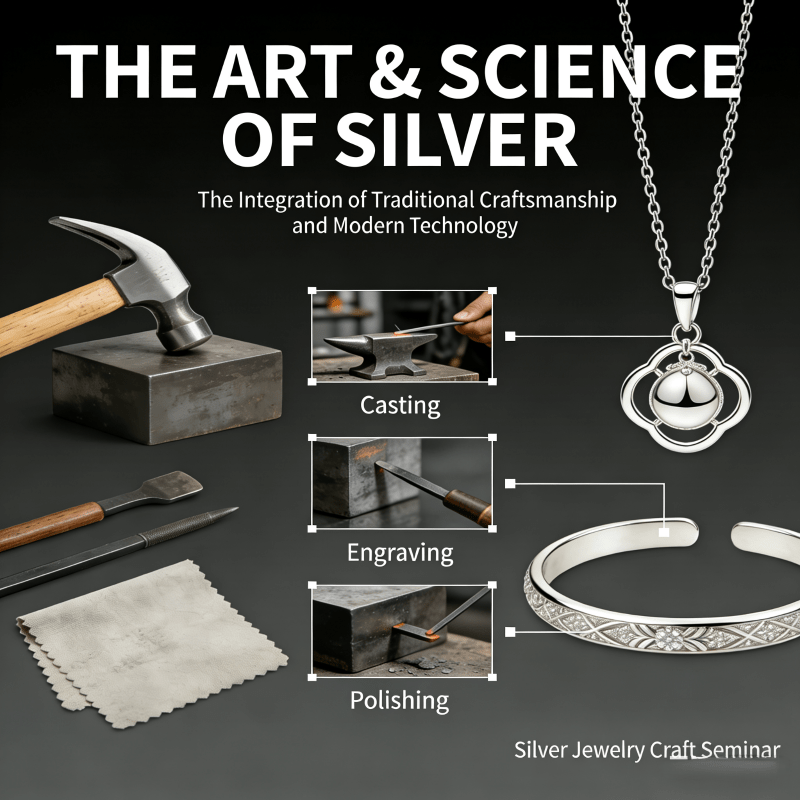
For brands and retailers, silver jewelry is more than an accessory—it’s a blend of timeless beauty and wearable art. However, the difference between a best-selling piece and a returned item often lies in the manufacturing process.
When sourcing silver jewelry for large-scale projects, understanding the production workflow is critical. It allows you to communicate effectively with factories, set realistic quality standards, and avoid costly mistakes. This guide breaks down the key stages of silver jewelry manufacturing, from raw material selection to the final polish, with a focus on the techniques that define premium quality.
1. Material Selection: The Foundation of Quality
The journey begins with choosing the right base material. For commercial and luxury silver jewelry, two standards dominate the market:
• 925 Sterling Silver: The industry gold standard, consisting of 92.5% pure silver and 7.5% alloy (usually copper). This addition drastically improves durability and scratch resistance, making it ideal for everyday wear and intricate designs (e.g., beaded bracelets or detailed pendants).
• Silver Plating: A base metal (like brass) is coated with a layer of pure silver. This is a cost-effective alternative for fashion-forward, low-moisture designs.
Pro Tip for Buyers: Always specify nickel-free alloys in your manufacturing brief. This complies with EU REACH regulations and prevents skin irritation for your end customers.
2. Design & Prototyping: From Concept to Reality
Before mass production, precision is everything. Modern silver jewelry manufacturing relies on a hybrid of old and new technology:
• CAD Design: For complex or symmetrical pieces, designers use Computer-Aided Design (CAD) software. This allows for easy modification of dimensions (critical for setting stones like White Quartz) and ensures consistency across thousands of units.
• 3D Printing & Wax Molds: The CAD file is used to 3D print a wax model or create a master mold. This "lost-wax" method is the most common technique for casting detailed silver pieces.
• Hand Carving: For artisanal or organic designs—such as Nugget Bead settings or hand-braided silver wire—master craftsmen hand-carve the original model, adding unique texture and character.
3. Casting: Bringing Silver to Life
Casting is where the raw silver becomes a tangible form. The most prevalent method is the Investment Casting Process:
1. Tree Assembly: Wax models are attached to a central wax sprue, forming a "tree."
2. Investment: The tree is placed in a flask and filled with a liquid ceramic material (investment).
3. Burnout: The flask is heated in an oven, melting and vaporizing the wax, leaving a perfect negative cavity.
4. Pouring: Molten silver is poured into the hot cavity. The high temperature prevents the metal from cooling too quickly, ensuring it fills every fine detail.
5. Cooling & De-flasking: Once cooled, the ceramic shell is broken away, revealing the rough silver pieces.
4. Filing & Pre-Finishing: Refining the Form
The cast pieces are still attached to the sprue and have rough edges. This stage involves:
• Cutting: Separating individual pieces from the sprue.
• Filing & Sanding: Removing excess metal, smoothing sharp edges, and refining the overall shape. This is especially important for pieces that will be worn close to the skin, like bangles or lever-back earrings.
5. Stone Setting: Where Metals Meet Gemstones
For designs incorporating beads or gemstones (a staple in fashion jewelry), this is the make-or-break stage. Common setting techniques for silver include:
• Prong Setting: Ideal for faceted stones like White Quartz, using metal prongs to hold the stone securely.
• Bezel Setting: A metal rim is wrapped around the stone, offering maximum protection—perfect for cabochon cuts or irregular Nugget Beads.
• Pavé Setting: Tiny stones are set closely together to create a glittering surface, often seen in high-end silver jewelry.
6. Soldering & Assembly: Putting It All Together
Components like chains, clasps, and findings are attached during assembly:
• Soldering: Heating silver solder to join metal parts permanently. Skilled artisans ensure clean, invisible seams.
• Link Assembly: For chain bracelets or necklaces, links are connected and closed precisely.
• Setting Findings: Attaching earring backs (e.g., lever back), lobster clasps, or adjustable sliders to complete the piece.
7. Polishing & Finishing: The Final Touch
This stage determines the visual appeal and feel of the jewelry. Silver can be finished in various ways:
• High Polish: A mirror-like shine achieved with buffing wheels and compounds.
• Brushed/Matt Finish: A subtle, textured surface created with abrasive brushes.
• Oxidation (Antiquing): A chemical process darkens the recessed areas, enhancing the design’s detail and giving it a vintage look.
• Rhodiating: Plating the silver with rhodium (a member of the platinum family) prevents tarnishing and adds a brilliant white luster—essential for maintaining quality during shipping and storage.
8. Quality Control & Packaging
Before shipping, every piece undergoes rigorous QC:
1. Visual Inspection: Checking for defects, misaligned stones, or uneven plating.
2. Functional Test: Ensuring clasps open/close smoothly and chains are strong.
3. Hallmarking: Stamping the piece with "925" to certify its purity (a legal requirement in many markets).
Finally, pieces are packaged in anti-tarnish bags or custom branded boxes to protect them during transit to your warehouse or directly to consumers.
Why Partner with a Manufacturer Who Masters These Processes?
Sourcing silver jewelry is not just about finding the lowest price. It’s about partnering with a factory that understands the nuances of material science and artisanal skill.
Whether you’re launching a line of beaded silver bracelets with White Quartz accents or a collection of minimalist sterling silver pendants, knowing these processes empowers you to ask the right questions and deliver exceptional quality to your customers.
Are you ready to bring your silver jewelry designs to life? Our team of experienced craftsmen and QC experts specialize in producing high-quality silver jewelry for global brands. Contact us today to discuss your project requirements and request a sample.
Table of Contents
- 1. Material Selection: The Foundation of Quality
- 2. Design & Prototyping: From Concept to Reality
- 3. Casting: Bringing Silver to Life
- 4. Filing & Pre-Finishing: Refining the Form
- 5. Stone Setting: Where Metals Meet Gemstones
- 6. Soldering & Assembly: Putting It All Together
- 7. Polishing & Finishing: The Final Touch
- 8. Quality Control & Packaging
- Why Partner with a Manufacturer Who Masters These Processes?