
 EN
EN



When producing friendship bracelet orders in large quantities, material selection becomes the critical factor that determines whether your batch will maintain quality standards or face durability failures that impact customer satisfaction and business reputation. Understanding how different materials behave under mass production conditions and extended wear scenarios allows manufacturers and retailers to make informed decisions that balance cost efficiency with long-term performance expectations.
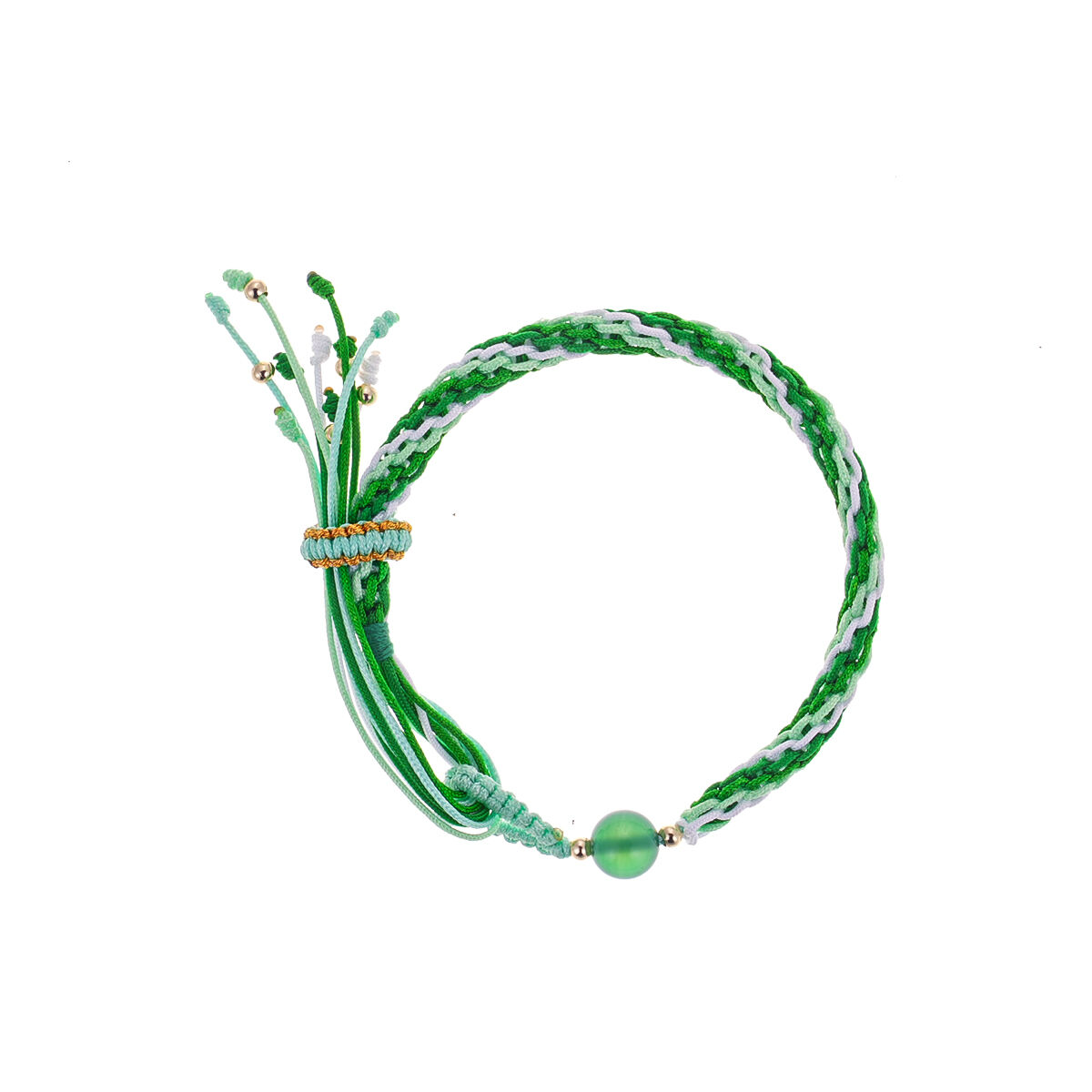
The durability challenges that emerge during large-batch friendship bracelet production differ significantly from small-scale or individual crafting scenarios. Material inconsistencies, tension variations during weaving, and quality control limitations at scale all contribute to potential weak points that become apparent only after extended wear testing. Successful large-batch production requires understanding how each material component responds to manufacturing stress and real-world usage patterns.
Core Thread Materials and Their Durability Characteristics
Cotton Thread Performance in Bulk Production
Cotton remains the most traditional material for friendship bracelet construction, but its performance in large batches reveals specific durability patterns that manufacturers must consider. High-quality mercerized cotton demonstrates superior color retention and reduced shrinkage compared to standard cotton varieties, making it more suitable for commercial production where consistency matters. The fiber structure of cotton allows for excellent knot security, which prevents the unraveling issues that commonly affect friendship bracelet longevity.
However, cotton's natural fiber composition makes it susceptible to moisture absorption and bacterial growth, particularly problematic in humid climates or for customers who wear their friendship bracelet during physical activities. Batch testing reveals that untreated cotton shows significant strength degradation after 30 days of simulated wear, while treated cotton maintains approximately 85% of its original tensile strength under similar conditions.
The dyeing process significantly impacts cotton durability in large-batch scenarios. Reactive dyes bond chemically with cotton fibers, creating more permanent coloration that resists fading during regular wear and washing. Conversely, direct dyes may appear more vibrant initially but tend to bleed or fade unevenly across a production batch, creating quality inconsistencies that become apparent only after customer use.
Polyester and Synthetic Fiber Advantages
Polyester threads offer superior durability characteristics that become particularly valuable in large-batch friendship bracelet production. The synthetic fiber structure provides enhanced resistance to moisture, UV radiation, and chemical exposure, making these bracelets suitable for customers with active lifestyles or those living in challenging environmental conditions. Polyester maintains its structural integrity and color vibrancy significantly longer than natural fibers under standardized wear testing.
The consistency of synthetic fiber production translates to more predictable results across large batches. Unlike natural fibers that may vary in thickness, strength, and dye absorption between different harvests or processing lots, polyester threads maintain uniform specifications that facilitate quality control during mass production. This consistency reduces the variance in friendship bracelet durability within a single batch.
Advanced polyester blends incorporate UV stabilizers and antimicrobial treatments that extend friendship bracelet lifespan in real-world conditions. Testing data indicates that treated polyester friendship bracelets retain 95% of their original appearance after 90 days of continuous wear, compared to 70% retention for untreated natural fiber alternatives.
Closure and Hardware Components
Metal Hardware Durability Considerations
The hardware components used in adjustable friendship bracelet designs significantly influence overall durability, particularly in large-batch production where material sourcing and quality control become critical factors. Stainless steel findings resist corrosion and maintain their structural integrity across diverse environmental conditions, making them ideal for friendship bracelet applications where longevity is prioritized over cost considerations.
Brass and copper alloys offer cost advantages in large-batch production but require protective coatings to prevent tarnishing and skin discoloration. The electroplating process quality varies significantly between suppliers, and inconsistent coating thickness can lead to premature failure in portions of a production batch. Quality control testing should include salt spray exposure and pH testing to identify hardware that may fail during normal wear conditions.
The mechanical stress points where hardware connects to thread components require particular attention in durability assessment. Sharp edges or poorly finished connection points can cause thread abrasion that leads to friendship bracelet failure even when the primary thread materials remain structurally sound.
Sliding Knot and Adjustment Mechanisms
Traditional sliding knot closures provide excellent durability when properly executed but require consistent technique across large-batch production to maintain reliability standards. The knot tightness and thread tension must be carefully controlled to ensure that adjustment mechanisms function smoothly without loosening during normal wear or becoming too tight for customer adjustment.
Alternative closure methods such as barrel clasps or magnetic closures offer advantages in automated production environments but introduce different durability considerations. Barrel clasps provide secure closure but may become difficult to operate if thread fraying occurs around the connection points. Magnetic closures offer convenience but may lose strength over time, particularly when exposed to elevated temperatures during shipping or storage.
Bead and Decorative Element Impact
Natural Stone Bead Durability
Natural stone beads add aesthetic appeal to friendship bracelet designs but introduce durability variables that must be carefully managed in large-batch production. The hardness rating of different stone types determines their resistance to chipping, cracking, or surface damage during manufacturing and wear. Harder stones like quartz varieties maintain their appearance longer but may cause increased thread wear at contact points.
The drilling quality and hole finish significantly affect friendship bracelet longevity when natural stones are incorporated. Rough or improperly finished holes create sharp edges that cut through thread materials over time, leading to premature failure. Quality control protocols should include inspection of bead holes and thread protection measures such as crimp covers or thread guards at high-stress connection points.
Stone stability during thread movement requires consideration of bead weight distribution and spacing. Heavier stones concentrate stress on adjacent thread sections, potentially creating failure points that become apparent only after extended wear testing. Batch testing should simulate the movement patterns that friendship bracelets experience during typical daily activities.
Synthetic and Glass Bead Performance
Glass beads offer consistent quality and appearance across large production batches but require careful handling to prevent cracking during the manufacturing process. The annealing process used in glass bead production affects stress patterns within the material, and poorly annealed beads may develop hairline cracks that propagate during normal wear, leading to bead failure and potential thread damage.
Acrylic and polymer beads provide excellent durability characteristics with minimal weight penalty, making them suitable for friendship bracelet applications where comfort and longevity are priorities. These materials resist impact damage better than glass or stone alternatives and maintain their color stability under UV exposure and normal wear conditions.
Manufacturing Process Effects on Material Durability
Tension Control During Production
The tension applied during friendship bracelet weaving significantly affects the long-term durability of the finished product. Excessive tension creates stress concentrations that may not be apparent during initial quality inspection but lead to premature failure during customer use. Conversely, insufficient tension results in loose construction that allows excessive thread movement and accelerated wear at contact points.
Consistent tension control becomes particularly challenging during large-batch production where multiple operators or automated equipment may be involved. Standardized procedures and regular tension measurements help maintain quality consistency across an entire batch. Thread elongation testing can identify friendship bracelets that were constructed with inappropriate tension levels before they reach customers.
The relationship between thread tension and material elasticity varies significantly between different fiber types. Natural fibers typically require lower tension settings to prevent fiber damage, while synthetic materials can withstand higher tension levels that create more secure knot structures. Understanding these material-specific requirements prevents production errors that compromise durability.
Quality Control and Testing Protocols
Effective quality control for large-batch friendship bracelet production requires testing protocols that simulate real-world wear conditions rather than relying solely on visual inspection. Accelerated wear testing using mechanical manipulation devices can identify durability issues within days rather than waiting for customer feedback over weeks or months.
Statistical sampling approaches allow manufacturers to assess batch quality without testing every individual friendship bracelet. Random sampling combined with specific testing of items that show visual irregularities provides a balanced approach to quality assurance while maintaining production efficiency. Testing protocols should include both immediate stress testing and extended wear simulation to identify different types of potential failures.
FAQ
How do different thread materials affect the overall lifespan of friendship bracelets in large production runs?
Cotton threads typically provide 3-6 months of regular wear before showing significant deterioration, while high-quality polyester can maintain appearance and structural integrity for 12-18 months. In large-batch production, polyester offers more consistent results across the entire batch, reducing customer complaints and returns due to premature failure.
What testing methods help predict friendship bracelet durability before mass production?
Accelerated wear testing using mechanical stress simulation, UV exposure chambers for color fastness, and salt spray testing for hardware components provide reliable durability predictions. Sample batches should undergo 30-day accelerated testing that simulates 6 months of normal wear, including exposure to moisture, temperature cycling, and mechanical stress.
Which bead materials create the most durability issues in friendship bracelet production?
Poorly finished natural stone beads with rough drill holes cause the most thread damage and premature failure. Soft stones like turquoise or coral may chip during production or wear, while improperly annealed glass beads can develop stress cracks. Quality control should focus on bead hole finish and material hardness compatibility with thread materials.
How does batch size affect material quality consistency in friendship bracelet manufacturing?
Larger batches increase the risk of material variation, particularly with natural fiber threads and stone beads that may come from different production lots. Maintaining consistent supplier relationships and implementing incoming material inspection helps control quality variation. Batch sizes above 1000 units typically require more rigorous quality control protocols to maintain acceptable consistency levels.
Table of Contents
- Core Thread Materials and Their Durability Characteristics
- Closure and Hardware Components
- Bead and Decorative Element Impact
- Manufacturing Process Effects on Material Durability
-
FAQ
- How do different thread materials affect the overall lifespan of friendship bracelets in large production runs?
- What testing methods help predict friendship bracelet durability before mass production?
- Which bead materials create the most durability issues in friendship bracelet production?
- How does batch size affect material quality consistency in friendship bracelet manufacturing?